
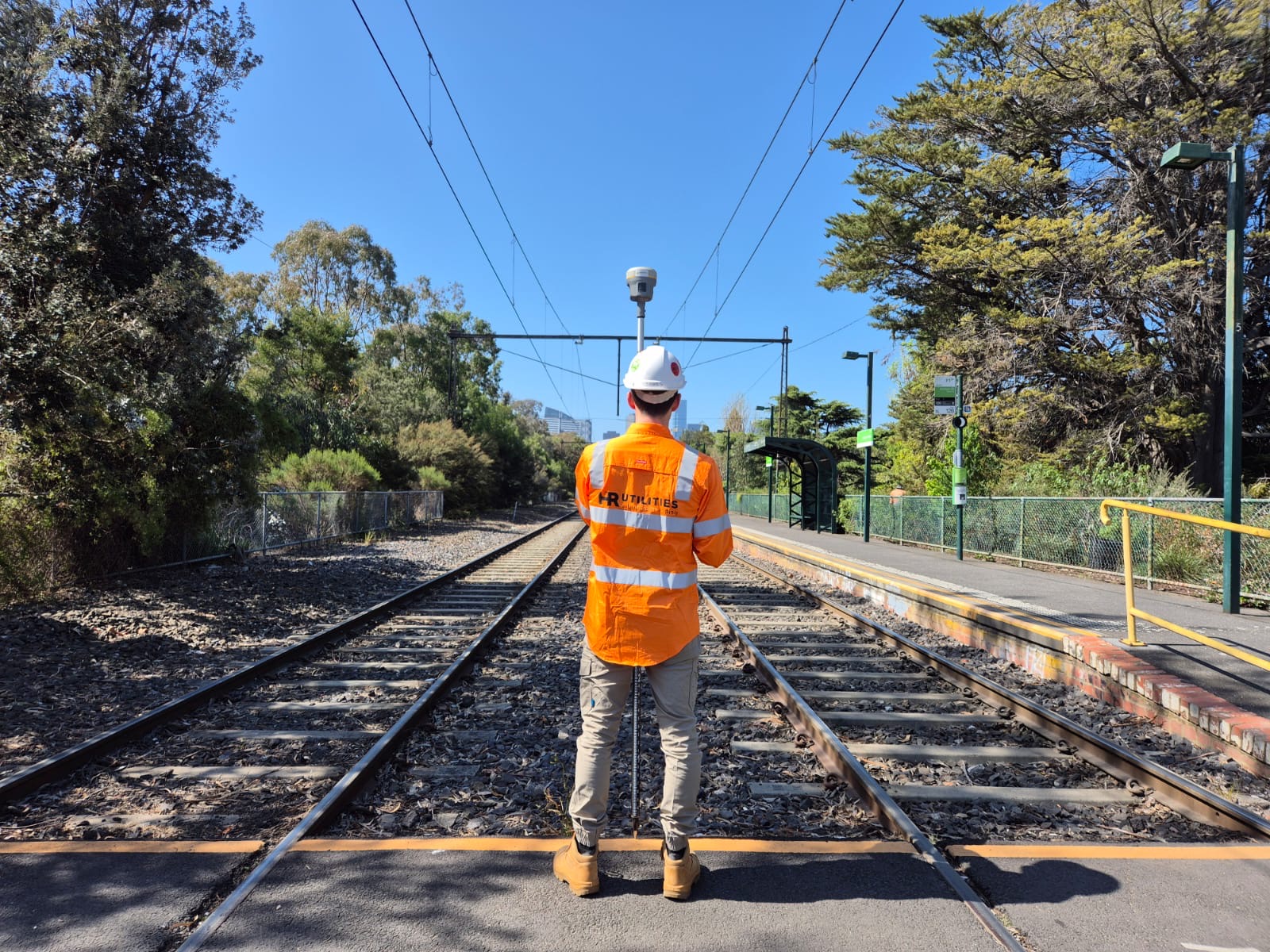
Plan work near underground services using locating evidence, the WorkSafe Victoria and Energy Safe Victoria guide, and asset-owner conditions. Confirm clearances, permissions and site controls before excavation.
Employers and others responsible for excavation must manage underground-service hazards. Identify the assets that the work could affect, obtain available records and asset-owner instructions, and investigate service positions before planning excavation.
The WorkSafe Victoria and Energy Safe Victoria Guide to Undertaking Work Near Underground Services (December 2022) translates that duty into a practical sequence: lodge a Before You Dig Australia enquiry to obtain available records, then actively locate services on site using electromagnetic detection, ground penetrating radar, or non-destructive digging to confirm position and depth.
BYDA plans indicate where services may be; they do not replace site investigation. Record any missing services or uncertain positions and refer unresolved hazards to the asset owner and site team. Locating is one part of the work plan, alongside permissions and site controls.
Use the current guide and asset-owner response for the service and activity involved. The checks below are commissioning inputs, not a clearance table or permission to excavate.
Account for the asset's position, size, protective structures and location uncertainty when setting the work area.
Electricity distribution cables, gas distribution mains, water mains, telecommunications
Confirm the service owner, type and position. Record location uncertainty and any protective covers or conduits.
Review mechanical and manual excavation restrictions. Do not treat hand digging or vacuum excavation as automatic permission to work.
Get any required written asset-owner permission and brief the site team on its conditions before excavation.
Transmission cables, high-pressure gas transmission pipelines
Transmission pipelines and high-voltage services can have separate requirements. Obtain the owner's conditions for the proposed activity.
Agree the exclusion area, permits, plant restrictions and any owner attendance or supervision before work.
Stop and escalate unresolved service positions or conflicting instructions. A locating mark does not grant permission to excavate.
The guide restricts manual excavation near assets as well as machinery. Obtain any required written permission before entering a restricted work area.
A structured sequence aligned with the OHS Act 2004 (Vic) duty and the WorkSafe Victoria / Energy Safe Victoria Guide.
Lodge a BYDA enquiry and review the asset-owner responses. Check for private or unrecorded services and obtain current conditions for the proposed work.
Use suitable locating methods and agree any targeted exposure before work. Record the evidence, investigation limits and unresolved areas.
Use the WorkSafe and Energy Safe Victoria guide with asset-owner conditions to plan clearances and the work method. Obtain any required written permissions.
Confirm any required ESV registration matches the plant involved. Agree communication, stopping arrangements and site controls before plant enters the work area.
Where the No-Go Zone rules require an ESV-registered spotter, confirm current registration and the endorsement for the plant involved before work starts. Check the guide and asset-owner conditions for your activity.
The guide requires spotters to dedicate their attention to spotting and provide direct warnings to the plant operator. Agree communication and stopping arrangements in the work plan, including what to do if the crew encounters an unexpected service.
Use gas main locating or other suitable investigation methods to establish service evidence for the work plan. A spotter does not resolve an unknown service position or replace required owner permissions.
Locating evidence helps the site team plan the work area. Record service position, depth evidence and unresolved areas, then apply the owner's conditions and the relevant work restrictions.
Electromagnetic locating, GPR and targeted physical exposure provide different evidence. Agree the required investigation accuracy and controls before fieldwork. A quality-level label alone does not establish that machinery can approach an asset.
Where services are absent from available plans — a common finding on older urban sites — the locating process is what identifies them in the first place. Services cannot be managed using No-Go Zones if their existence is unknown. See also our utility locating services for the full range of detection methods available.
A No-Go Zone restricts work near an underground service. Use the WorkSafe Victoria and Energy Safe Victoria guide with the asset owner's instructions to establish the applicable zone, permissions and controls. Identify the service type and position, and account for uncertainty before planning plant movement or excavation. Locating a service does not authorise work inside a restricted zone.
Clearances and permissions depend on the service type, work method and asset-owner conditions. Consult the current WorkSafe Victoria and Energy Safe Victoria guide and the owner's response for your site. The guide includes restrictions on both mechanical and manual excavation; hand digging is not a blanket exception. Confirm the required written permissions before working near an asset.
Check the applicable No-Go Zone rules and asset-owner conditions when planning the work. Where those rules require an ESV-registered spotter, confirm that the spotter holds current registration for the plant they will observe. The WorkSafe and Energy Safe Victoria guide requires the spotter to dedicate their attention to the task and provide direct warnings to the operator. A spotter does not replace locating, written permissions or the site's work controls.
Locators compare available plans with site evidence and use suitable field methods to investigate service position and depth. They must report unresolved areas and detection limits. The site team uses that evidence with asset-owner instructions to plan clearances, permissions and controls. A locating report does not certify that excavation is safe or discharge the site's other safety responsibilities.
Confirm the service type, position, work method and asset-owner conditions before using machinery. Obtain any required written permission and apply the specified clearances, spotter arrangements and site controls. If the service position or permission is unresolved, stop and refer the issue to the asset owner and the person responsible for the work plan. Vacuum excavation also requires suitable controls and permission where applicable.
Expert utility locating services with BYDA certified precision.
Serving projects across Australia with advanced subsurface mapping solutions.